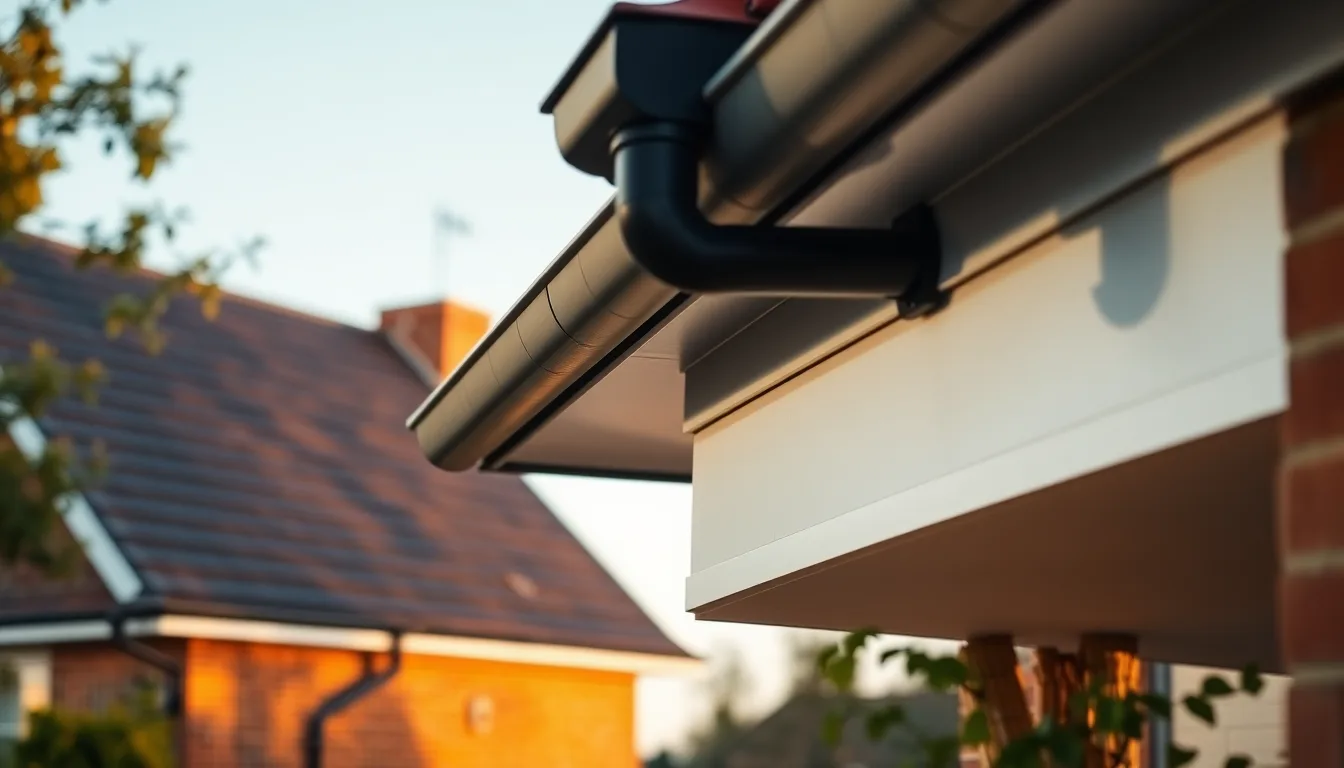
Fascias, soffits and guttering rarely get much attention until something goes wrong. Together, though, they protect the most exposed part of your roof: the edge, where it meets the walls. Knowing what each part does makes it easier to spot a problem early.
What each part actually does
The fascia is the board that runs along the edge of the roof, fixed to the rafter ends. It supports the guttering and gives the roofline a finished look.
The soffit sits underneath the fascia, closing the gap between the wall and the roof edge. It usually has ventilation slots built in, and these let the roof space breathe, which helps stop condensation and rot in the timbers above.
The guttering then carries rainwater away from the roof and the walls. Because it directs water safely down to the drains, it stops rain running down the brickwork or pooling at the foundations.
Warning signs worth acting on
- Peeling paint or rot on timber fascias. Older timber fascias need repainting every few years. Once they start to rot, however, water gets behind them and the damage spreads quickly.
- Sagging or leaking gutters. A gutter that’s pulled away from the fascia, or drips along a joint, is no longer doing its job properly.
- Plants growing in the guttering. This is a sure sign the gutters haven’t been cleared in a while. As a result, blocked gutters can overflow straight down the wall.
- Damp patches on an outside wall below the roofline. This often traces back to a leaking or overflowing gutter rather than the roof covering itself.
How often to clean your gutters
As a general rule, gutters are worth clearing at least twice a year — typically in autumn, after the leaves have fallen, and again in spring. A property with overhanging trees may need clearing more often. Leaving gutters blocked for too long doesn’t just cause overflow, though. The trapped water and debris add weight that can pull fixings loose, and standing water against a timber fascia speeds up rot.
Materials: timber, uPVC or cast-iron style
Modern uPVC fascias, soffits and guttering are now the most common choice. That’s because they don’t need repainting and hold up well to UK weather. Timber gives a more traditional look that suits some period properties, particularly in conservation areas, although it needs regular upkeep to last. Cast-iron-style guttering is a middle ground: it gives a heritage look with more durability than timber, though at a higher cost than uPVC.
If your roofline problems are part of a wider issue with the roof itself, our guide to spotting the warning signs a roof needs replacing is worth reading alongside this one.
We replace and repair fascias, soffits and guttering across Teddington, St Margarets and Twickenham, and we also offer one-off gutter clearance visits.
Related reading
- Chimney Repairs, Re-Pointing and Removal Explained
- Velux & Roof Windows: Costs, Planning and Installation
- Storm Damage to Your Roof: What to Do and How Insurance Works
- Choosing a Trustworthy Roofer in South West London: 10 Questions to Ask
- Roofing in a Conservation Area: Rules for Richmond, Twickenham & St Margarets
- How Much Does a New Roof Cost in Twickenham & Richmond? (2026 Price Guide)
- Flat Roof Repair vs Replacement: Which Do You Need?
- EPDM Rubber vs GRP Fibreglass vs Felt: The Best Flat Roof Material for London Homes