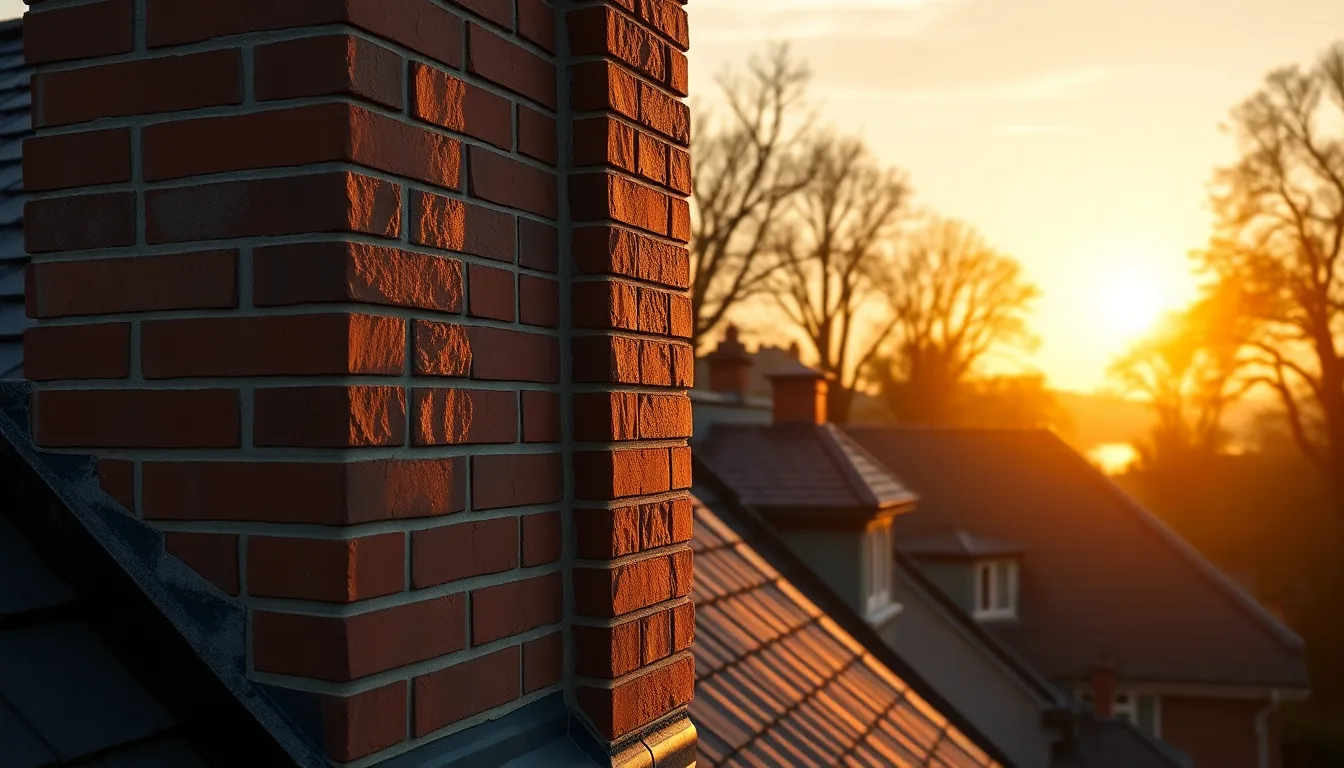
Chimneys are one of the most common sources of a roof leak. That’s because they combine several vulnerable details in one place. There’s brickwork exposed to the weather, mortar joints, and a lead flashing seal where the stack meets the roof.
Any one of these can fail on its own. So a chimney leak usually needs a proper inspection, rather than a single quick fix.
Why chimneys leak
Most chimney leaks come from one of three places. Failed pointing — the mortar between the bricks — lets water soak into the stack. From there, it can travel down into the loft, or even into the chimney breast inside the house.
Cracked or missing flaunching (the mortar cap around the chimney pots) lets rain straight into the flue. Damaged lead flashing is different again. It sits where the chimney meets the roof tiles, and it’s one of the single most common causes of a leak anywhere on a roof.
Re-pointing
Re-pointing means raking out the old, failed mortar between the bricks and replacing it with fresh mortar. In a conservation area, we match the new mortar to the original in both mix and profile. It’s usually the right fix when the brickwork itself is sound but the joints have simply worn out over time. That’s common on chimneys built more than a few decades ago.
Repair vs removal
Not every chimney needs saving. Sometimes nobody uses a stack any more — for example, the owner has blocked up the fireplace below. If it also has significant structural problems, removal can be the better option. This usually means taking the stack down to roof level, or below it with a false stack rebuilt for appearance.
It’s often more cost-effective than an extensive repair. However, many period properties in conservation areas must keep an original chimney for the sake of the street’s character. So it’s worth checking before you assume removal is an option — our guide to roofing in a conservation area explains more.
Lead flashing
Lead flashing is the metal seal that keeps water out where a chimney, or any vertical surface, meets the roof covering. It’s a small detail, but it fails more often than the roof tiles around it. That’s usually because it has worked loose or corroded over time.
If you’ve had a leak specifically near a chimney, check here first. It’s frequently a straightforward repair, rather than needing chimney work at all.
Getting it assessed properly
Chimney problems are often hidden until someone is actually up there. So a proper inspection matters more here than almost anywhere else on the roof. A quick look from the ground can easily miss a failing joint. If your leak turned up suddenly, our emergency leak checklist covers what to do in the meantime.
We carry out chimney repairs, re-pointing and lead work across St Margarets, Richmond upon Thames and Teddington.
Related reading
- Velux & Roof Windows: Costs, Planning and Installation
- Storm Damage to Your Roof: What to Do and How Insurance Works
- Choosing a Trustworthy Roofer in South West London: 10 Questions to Ask
- Roofing in a Conservation Area: Rules for Richmond, Twickenham & St Margarets
- How Much Does a New Roof Cost in Twickenham & Richmond? (2026 Price Guide)
- Flat Roof Repair vs Replacement: Which Do You Need?
- EPDM Rubber vs GRP Fibreglass vs Felt: The Best Flat Roof Material for London Homes
- How to Tell If Your Roof Needs Replacing: 8 Warning Signs